

In an era of rapid technological trade with influence of A.I. provides us areas of purpose with challenges, which foster mental and physical health far beyond mere pleasure. Purpose-driven blue-collar careers, especially in high-tech trades that are affordable, focused Voltech (vocational-technical) programs—offer hands-on problem-solving, with fulfillment, contrasting with debt-heavy four-year degrees often mismatched to the demands of high-tech jobs that are in high demand.
These highly skilled trades, like welding and electrical work to infrastructure roles, remain irreplaceable by A.I., which automates routine white-collar jobs. These high-tech jobs amplify the need of skilled human judgment and dexterity. While these are high-tech jobs, they still require strong communication skills that are essential for success in both professional and personal life. Embracing Voltech paths provides quicker employability, lower debt, job security amid labor shortages, and a lifestyle of meaningful contribution and lifelong well-being.
This purpose often manifests through our careers with purpose providing a lifetime of contributing to others. The opportunity to solve real-world challenges with A.I. has a tangible edge that can lead to a lifetime of career satisfaction.
As we navigate the A.I. evolving job market, a quiet revolution is underway—one that favors high-tech trade skills acquired two-year programs at vocational-technical (Voltech) colleges that in most cases is conveniently located near where students live reducing cost. These paths contrast sharply with the traditional four-year college degree laden with nonspecific related skills, which, for many professions, burdens students with irrelevant coursework and adds to student’s debt without guaranteeing employability attributes after graduating.
Effective Communication is Critical for all Professions
I would however stress one area that all students must develop to be able to succeed in life not just in their profession’s pursuit but in their personal life. Being able to communicate is essential in both verbal and written communications along with comprehension skills. Courses in business writing and speech are key to our lives that should be started in middle school and through college courses, even in voltech curriculum. This includes presentation before groups.
My love of writing has led me to writing books in retirement that span from fitness to adventure books espionage that was a hobby that has also became part of my second career. I used my love of health, fitness, and military to write my IRONCLAD FITNESS & CATABOLIC DIET Program and my recent special forces book, The SCAR & SICARIUS: The Odessa Squad, where all my 16 books are on Kindle:
The transformative effects of artificial intelligence (A.I.) on the workforce
At the core of human fulfillment lies purpose—a guiding force that propels us beyond mere existence to a thriving lifestyle. Psychological research, including studies from positive psychology pioneers like Martin Seligman, underscores that individuals with a strong sense of purpose and communication skills report lower levels of stress, anxiety, and depression that supports a healthy lifestyle. Writing provides me with an outlet to decompress and cover experience in my own life to others.
Physically, this translates to better immune function, reduced inflammation, and even longer lifespans, as evidenced by longitudinal studies such as the Blue Zones project, which highlights communities where purposeful living correlates with exceptional longevity. When purpose aligns with contributing to others, it provides for successful communities and benefits us as well. At the root of our success is not just possessing skills but communicating these skills to others. Our ideas must be communicated to others to develop solutions.
Careers that address societal challenges
Whether building infrastructure, ensuring energy reliability, or maintaining essential services—provide skills we developed have a huge impact on other people’s lives regardless of our field. Imagine the electrician restoring power after a storm, the welder fabricating components for renewable energy systems or helping a friend, or the plumber ensuring clean water access in undeserved areas, or even a teacher breaking through mental blocks of a student to reveal their talents. These avenues provide a profound sense of accomplishment, releasing dopamine and endorphins that bolster mental resilience and physical vitality.
Voltech colleges represent a paradigm shift education, offering targeted two-year degrees that equip graduates for immediate entry level into high-demand fields. Unlike the sprawling nonspecific curricula of four-year institutions, voltech programs focus on practical, hands-on training in areas like advanced manufacturing, robotics, medicine, and sustainable technologies. These voltech colleges have direct input on their curriculum from Industry and manufacturing that these colleges provide a workforce to.
These Voltech institutions are located near urban and rural areas alike, they minimize relocation disruptions, allowing students to integrate education with local job markets, that can be applied on an high school level. Graduates enter the workforce, even right out of high school, with skills that employers crave, often securing positions that offer not just financial stability but also intrinsic rewards. These Voltech students can later even provide employment opportunities to their community by owning their own business as they master their career skills.
For instance, a heavy equipment operator might help construct power lines, hospitals or bridges, directly enhancing public safety and quality of life of others. Purpose driven voltech careers also reduce burnout, encourage lifelong learning for others to learn a trade and promote physical activity for health and fitness in the community. These work forces serve as coaches on football, basketball, soccer, and baseball teams promoting health and fitness.
Contrast this with the traditional four-year college path, which, for most jobs, is overloaded with courses that offer little benefits to the employer. Liberal arts degrees are offer than not void of specialized skills needed in high-tech work force. These highly skilled voltech trades required mathematics and physics-based backgrounds due to the requirements of technical fields.
Over the past decade, we’ve seen a mismatch: millions of job openings in technical sectors have gone unfilled because recent college graduates lack qualifications special skills needed that includes math and science backgrounds. So high school students focus their curriculum on math and science that are basic requirements for high skills of tech jobs.
Data from labor market analyses reveals that fields like information technology, engineering support, and advanced trades have vacancy rates soaring where for every five retirements there is only one replacement is being provided. Liberal arts majors face underemployment rates exceeding 50% in some degrees. The curriculum bloat—mandatory classes in unrelated subjects like philosophy or foreign languages and lecture—extends time to degree completion, inflating costs and delaying entry into the workforce.
For many, this leads to student debt averaging between $30,000 to upwards of $130,000 for a typical four-year degree, compounding stress and hindering mental health of uncertainty of employment. Moreover, the disconnect between education and job requirements breeds frustration, as graduates discover their degrees don’t translate to practical expertise.
There will always be a need for grads that pursue four and eight-year degrees in technical fields such as engineering, science, medicine, law, etc. But even these areas will still require high tech voltech careers to provide support, installation, and maintenance. For every four or eight-year degree career will require three to four voltech technicians.
The Impact of A.I. in Modern-Day Careers
The advent of A.I. has accelerated a career shift, reshaping careers by automating white-collar tasks and elevating high-tech blue-collar roles that require only 18 to 24 months of education. A.I. excels at processing routine data providing predictive analytics and with generated intelligence. This will displace business administration, basic accounting, design, and entry-level programming to trade careers. However, it emphasizes the need and value of hands-on human judgment to verify A.I. results will be irreplaceable.
Consider the field welding: A.I. can optimize designs and materials that can be communicated in computer language, but a skilled welder must be able to assess the A.I. and computer’s fabrication. Similarly, electricians must be able to troubleshoot systems, a lineman must be able to maintain power grids under adverse conditions using A.I. as logistics support, and pipe fitters must ensure integrity of their work. Heavy equipment operators must be able to use laces for project sites, while carpenters and auto technicians must possess technology to use A.I. to diagnose and troubleshooting issues.
The Present Demand for High Tech Trade Skills
These fields boast staggering job openings—up to 60,000 vacancies in some categories—yet we’re graduating only about 3,300 qualified individuals annually. This gap underscores an opportunity: A.I. doesn’t eliminate jobs; it reallocates them to purpose-filled trades that still demand human ingenuity and skills. By pursuing Voltech training, individuals position themselves at the forefront of this huge evolution, contributing to innovations while enjoying job security and personal growth even in their own communities. A.I. will act like a partner to the trade worker taking pressure off job performance.
A Personal Experience with using A.I.
To illustrate this influence of A.I. as a valuable partner, I have been retired as a grid engineer for 10 years since 2015. After working 35 years with a transmission line utility designing power systems, I’ve been out of the workforce for a decade that can cause rust. I recently had a high school friend working with a municipality contact me about assessing the viability of installing a turbine at the base of a 145-foot large water tower for hydropower production during weekly operations.
This was too Intriguing to pass up this opportunity, I jumped at the chance, I first calculated the potential kilowatt output manually of the hydropower production process that took about two hours digging through my college references books. This involved fluid dynamics, efficiency rates, and energy conversion formulas. Then, I input the same parameters into an A.I. application. To my surprise, it generated a worksheet that almost mirrored my results, with outputs within 3% of my figures. But A.I. also suggested variations based on turbine sizes, that anticipated my next analytical step to suggest turbine sizes.
Yet this underscores a crucial caveat: A.I. requires specialized knowledge to yield accurate results. We must retain a computer mindset- of Garbage in, Garbage out. For the turbine project, I needed expertise in physics, hydraulics, and mathematics to define precise parameters needed as input, such as flow rates, pipe diameter, head pressure, and friction losses. A.I. sifted through raw data in lightning speed, narrowing estimates to seconds, but without my domain knowledge, the outputs could have been wildly off.
Using A.L., Trust but Verify
This echoes a quote by President Ronald Reagan he made to Soviet leader Mikhail Gorbachev: “Trust but verify.” Users must approach A.I. with skepticism, validating results against real-world conditions. In engineering, this means cross-checking with empirical data or simulations. A.I. isn’t a replacement for human insight; it’s a tool that enhances efficiency, allowing professionals to focus on creative problem-solving and ethical considerations removing anxiety. Believe me, I felt revealed when A.I. provided me similar results, especially since being 9 years out of engineering.
In high-skilled trades, A.I. might optimize a project and, even more important, predict needed maintenance and predict equipment failures to ensure safety and efficacy. This synergy between A.I. and skilled labor not only boosts productivity but also reinforces purpose, as workers gain confidence in serving their community.
My Personal Advice to Students in High School
My advice to high school graduates– I would strongly advise you to consider attending a Voltech college before committing to a full four-year program, that can come later. This strategy yields three major benefits. First, cost savings—Voltech tuition is often a fraction of university tuition, with many voltech programs coming under $8,000 total, versus $100,000 or more for a bachelor’s degree per year.
Second, employ ability during studies: many Voltech curricula include apprenticeships or part-time work, providing income and real-world experience that bolsters resumes, especially since there are so many openings in the community where these students live. A lot of industries are located where there is a work force training.
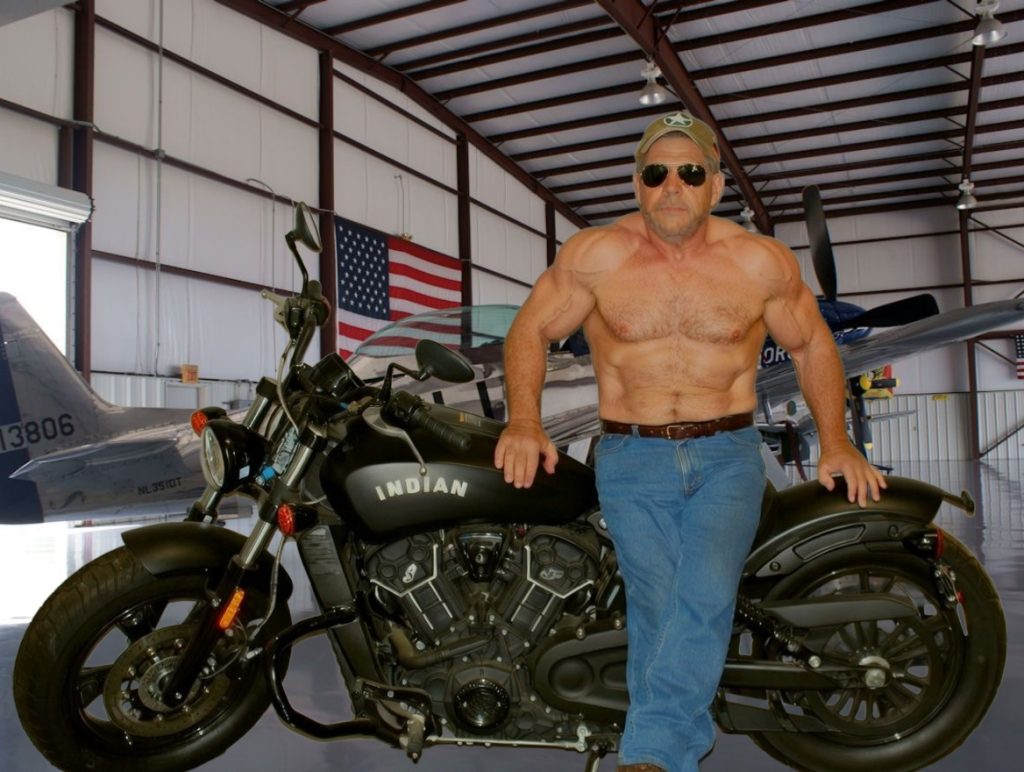
Third, a trade skill offers a fallback option like a second career- or in my case a second career after retirement, offering financial security and continued purpose for a lifestyle of health and fitness. For me to weld and handle heavy metal requires me to maintain my fitness and health.

In my own situation, before retiring, I enrolled in Voltech College for welding just as a hobby at first. Now, it’s evolved into a fulfilling second career, where I set my own schedule, fabricating custom pieces for local projects in my shop. This flexibility provides benefits for my mental and physical health without the grind of full-time employment.
Companies Experiencing Brain Drain by Prioritizing Education over Experience
A critical pitfall to avoid for students and companies is confusing education with experience, which often breeds failure for companies. We are just now recovering from an era where companies placed more importance on education than experience that led to what is called brain drain that can’t be replaced quickly. Now these same companies are now trying to lure these experienced 50 and 60 something employees back to the workplace.

In my transmission line career that led me to retire at age 58 instead of extending to age 66. Early in my engineering career with this transmission line utility, my administrators rose through the ranks as I did, understanding fieldwork challenges and providing critical support. This era was productive, with decisions grounded in practical knowledge and high satisfaction.
However, over the last 10 years of my tenure, leadership grew detached, stripping authority from fields that was bottom-up approaches to imposing top-down mandates lacking context or expertise from key field personnel. This led to inefficiencies, safety risks, and morale issues of dissatisfaction—issues stemming from over-reliance on college graduates just out of college that lack critical experience.
High-Tech Voltech Skills is more than a Job, it is a Healthy Lifestyle
The biggest contributors to our mental and physical health are rooted in purpose, particularly through lifelong careers that enable contributions our community. The rise of high-tech trades like voltech colleges offers an accessible path to this fulfillment, outpacing traditional degrees in relevance and efficiency. A.I.’s influence on these voltech careers demands a blend of technology and human skills. By heeding lessons from personal experiences and prioritizing practical education, we can foster generations equipped for satisfaction and impacts employment.

Whether restoring power, building infrastructure, or innovating with use of A.I., these high-tech careers promise not just livelihoods, but lives rich in meaning and satisfaction. Embracing this revolution isn’t just smart, it’s essential for holistic lifelong well-being. Here is a great example of a person with high-tech skills ca directly impact their community in my case.
A neighbor needed some welding work done over the weekend for a hunting trip and could not wait for Monday. My neighbor called me and asked if I could weld a wrench bracket on his Jeep’s frame. Just the opportunity to help was fulfilling on my part that was based on the Golden Rule– Do unto others as you have them do unto you. There is no more satisfaction than helping someone else, especially with skills you learned and developed!